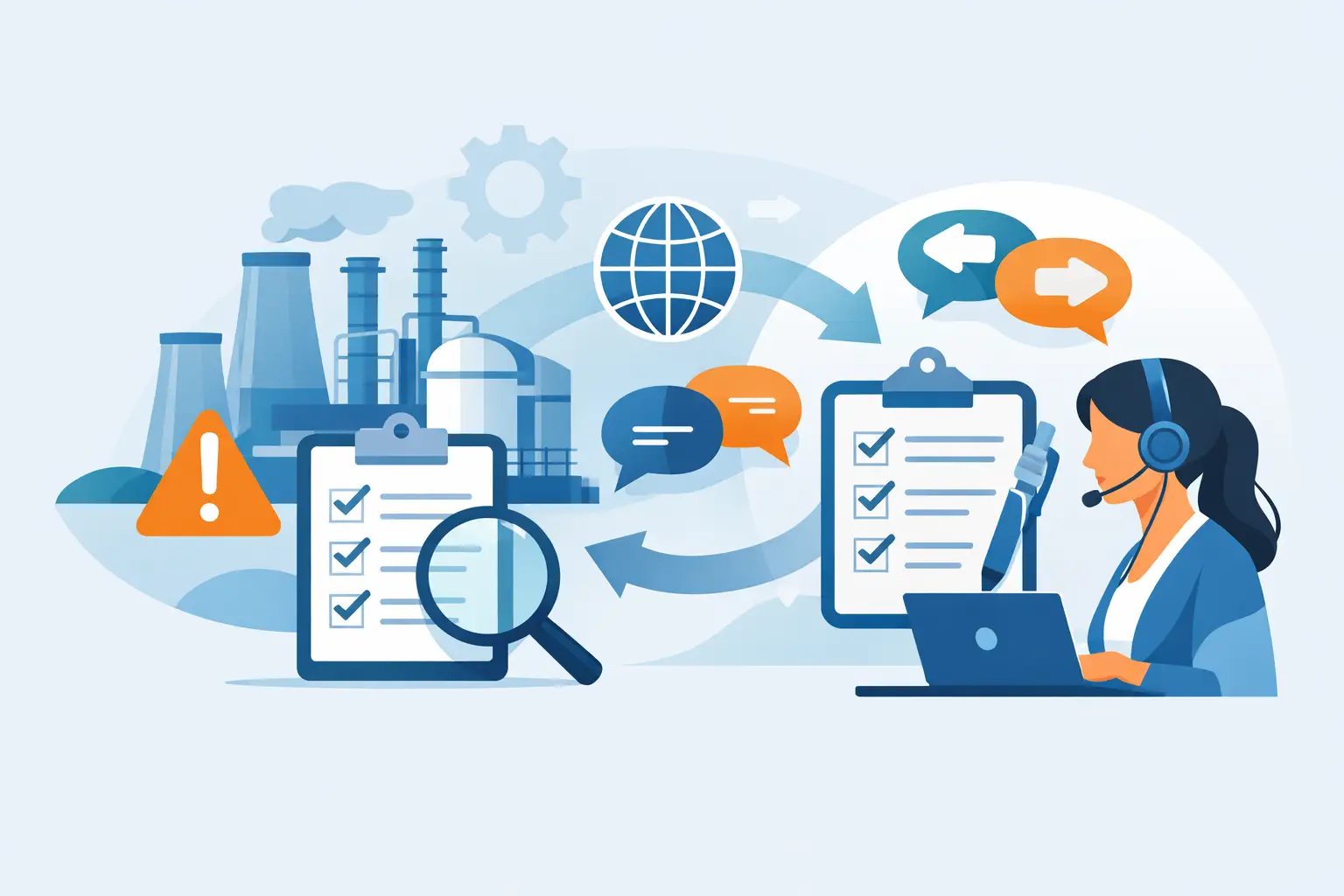
A permit-to-work briefing goes wrong faster than most managers expect. One mistranslated isolation step, one vague warning label, one training slide that uses the wrong term for a vent, drain or purge point, and the result is not just confusion. It can mean injury, shutdown, rework, failed audits or an incident that should never have happened. That is why a process safety translation checklist matters in any plant where instructions, signage, procedures or training must work across languages.
In industrial settings, translation is often treated as a document task. Process safety does not allow that luxury. Safety language has to perform under pressure, in noisy environments, during shift changes, contractor onboarding, maintenance shutdowns and emergency response. If the wording is technically correct but operationally unclear, the translation has still failed.
What a process safety translation checklist should prevent
The purpose of a checklist is not bureaucracy. It is control. In process industries, the biggest language failures usually come from predictable gaps: generic translators working without plant context, direct word-for-word translation of operating terms, inconsistent terminology across procedures, and documents approved without review by the people who actually use them.
Consider a confined space entry instruction translated for a multinational maintenance team. If one version says atmosphere testing is required before entry and another implies it happens during entry, that difference is not stylistic. It changes behaviour. The same applies to lockout-tagout instructions, chemical handling procedures, alarm response cards and contractor induction materials.
A useful checklist forces decision-makers to verify not just whether text has been translated, but whether the meaning, sequence, hazard level and plant-specific terminology remain intact.
Process safety translation checklist for industrial sites
A strong process safety translation checklist starts before the first sentence is translated. The first question is simple: what is the document for, and what risk sits behind it? A toolbox talk handout and an emergency shutdown procedure do not carry the same exposure. High-risk documents need a higher level of linguistic and technical control.
The next check is whether the translator or interpreter has sector knowledge. In a petrochemical plant, a linguist who has never worked with process terminology may produce a fluent text that is operationally unsafe. Terms linked to isolation, inerting, pressure relief, ignition sources or hazardous area classification cannot be guessed from general language skill. They need field-specific understanding.
Terminology control comes next. Before translation begins, the site should confirm approved terms for equipment, process stages, hazard communication, roles and abbreviations. This is where many projects go off course. A plant may use one term internally for a blowdown vessel, another term in OEM manuals and a third in training notes from a foreign contractor. If these are translated inconsistently, teams stop trusting the documentation.
Context review is equally important. Translators need drawings, photos, previous procedures, P&ID references or sample operating records where relevant. Without context, even a skilled technical linguist can misread whether a word refers to a component, an action or a safety state. In process safety, that distinction can be costly.
Review and validation should involve the right people. A line-by-line check by someone bilingual but unfamiliar with the plant is often not enough. The better approach is technical review by site personnel or specialists who understand the operation, followed by a language quality check to make sure instructions remain clear and readable for the target audience.
Finally, the checklist should confirm where and how the translation will be used. A procedure read in a control room can be more detailed than a laminated field instruction used during turnaround work. Translation quality is not just about accuracy. It is also about usability under real operating conditions.
The questions worth asking before approval
Before any process safety document is issued, managers should be able to answer a short set of practical questions. Is the hazard level clear in the target language? Are prohibitions, warnings and mandatory actions unmistakable? Have plant-specific terms been used consistently? Does the translated sequence match the original step for step? Has a technical reviewer checked the content in context, not in isolation?
It also helps to ask whether the translation would stand up during an incident investigation. If something goes wrong, could the site show that the safety-critical information was translated by a qualified specialist, reviewed properly and communicated in a form workers could realistically understand? If the answer is no, there is a governance issue as well as a language issue.
Where translation errors cause the most damage
Not every multilingual document carries the same operational risk. The most sensitive materials are usually permit-related instructions, startup and shutdown procedures, emergency response guidance, chemical safety communication, lockout-tagout documentation, contractor inductions and maintenance workpacks. Training content for temporary or foreign teams also deserves close attention, especially when practical tasks involve energy isolation, hot work, lifting operations or hazardous substances.
There is a further complication in projects involving new facilities, commissioning or retrofits. During these phases, terminology often shifts between designers, OEMs, EPC contractors and local operators. A translated text may be accurate against one source but wrong for the equipment as installed. This is why process safety translation must be tied to the current operating reality, not just the source file received by email.
Why signage and labels need special treatment
Short texts are often the most dangerous to translate badly. A long procedure gives some room for context. A valve tag, warning sign or control panel label does not. Here, every word carries weight. Space is limited, wording must be immediately understood, and ambiguity can lead to the wrong physical action.
This is also where literal translation causes trouble. The right wording for a hazard label may depend on legal conventions, workforce familiarity and established plant language. What reads correctly in one country may confuse contractors in another. Brevity matters, but not at the expense of precision.
Checklist discipline matters more in multilingual operations
Sites with mixed teams often assume English will bridge the gap. Sometimes it does for meetings and email. It is far less reliable for process safety. Under fatigue, time pressure or unfamiliar site conditions, people fall back on the language they understand best. If safety procedures are only partially translated, or translated inconsistently, teams begin to improvise. That is where expensive mistakes start.
The commercial case is straightforward. A delayed shutdown, repeated training session, failed permit, damaged equipment or reportable incident costs far more than proper technical translation. For procurement teams, this is not an administrative line item. It is risk control with a measurable return.
This is also why many industrial clients rely on specialist partners rather than general agencies. In technical environments such as energy, petrochemicals and automotive production, the difference between fluent wording and correct meaning is not academic. BeneDictum Kft. positions its service around that exact distinction because plants do not pay for words alone. They pay to prevent misunderstanding where the consequences are operational and financial.
How to use the checklist in practice
The best checklist is one that becomes part of project workflow. Build it into document approval, contractor onboarding, training preparation and change management. If a procedure is revised after a hazard study, the translated version should trigger review at the same time, not weeks later. If a foreign contractor arrives for a turnaround, their induction pack should already reflect validated site terminology.
It also pays to classify documents by risk. High-consequence materials should require specialist translation, technical review and version control. Lower-risk communications may need a lighter process. This is not about creating delay. It is about matching control to consequence.
One final point: check spoken communication as well as written content. A perfectly translated procedure can still fail if the on-site interpreter does not understand the plant process, maintenance sequence or safety terminology used in live discussions. Written and spoken language support should reinforce each other, especially during training, audits, shutdowns and commissioning.
A process safety translation checklist is valuable because it forces a simple standard: if a message protects people, equipment or production, it must be technically correct, operationally clear and verified in context. In high-stakes industry, that is not a premium extra. It is the baseline for working safely across languages.
0 Comments