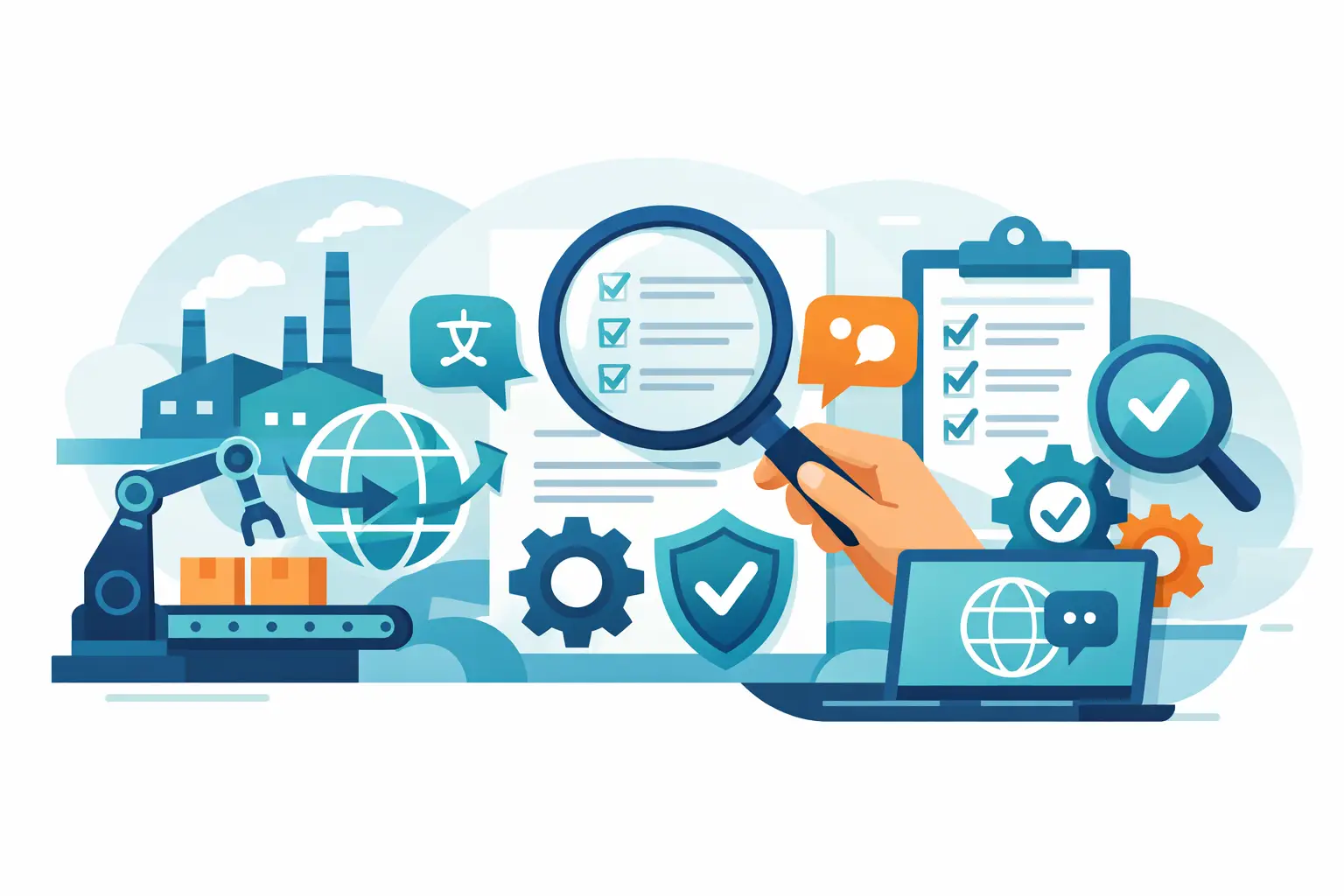
A shutdown briefing goes wrong far more quickly than most teams expect. One mistranslated maintenance instruction, one vague rendering of a lockout step, one incorrect unit in a technical document – and a routine multilingual task becomes a safety issue, a delay, or a cost line nobody planned for. That is why the best industrial translation quality controls are not editorial niceties. They are operational safeguards.
In industrial settings, translation quality is measured by outcomes. Did the contractor understand the permit-to-work conditions exactly? Did the commissioning team follow the correct sequence? Did training materials produce the intended behaviour on the shop floor? If the answer is uncertain, the quality process was weak, regardless of how polished the text looked.
What the best industrial translation quality controls actually protect
A general translation workflow may catch spelling, grammar and formatting. Industrial work needs more than that. It needs controls that protect technical meaning under real-world pressure, often across multiple parties, compressed deadlines and high financial exposure.
Consider a power plant outage, an automotive line upgrade or an SAP rollout in a manufacturing business. In each case, language errors can affect different layers of the operation. At one level, there is direct technical risk – an incorrect term for a valve type, a mistranslated parameter, an unclear safety step. At another, there is business risk – rework, rejected documentation, failed training, delayed acceptance, contractor disputes or downtime.
The strongest quality controls recognise this from the start. They are built to preserve terminology, context and intent, not merely to produce readable target-language text.
Best industrial translation quality controls start before translation
Many failures happen long before the first sentence is translated. A supplier receives source material with inconsistent terminology, outdated equipment names or unclear abbreviations, then is expected to produce a faultless target text. That is unrealistic.
The first control is source-text validation. If an operating procedure mixes internal shorthand with manufacturer terminology, that should be resolved before translation begins. If one team writes „trip”, another writes „shutdown”, and a third uses a software-specific alarm term, the translator needs a confirmed preference. Otherwise, inconsistency will simply travel into the translated document.
The second control is scope definition. Industrial buyers often request „translation” when they actually need a more specific output: certified translation, bilingual training material, dual-language signage, audit-ready documentation or terminology-aligned content for site use. Each demands a different level of checking. If the use case is unclear, the quality process will be mismatched.
The third control is audience mapping. A document for investors is not checked in the same way as a lockout procedure for maintenance staff. One prioritises commercial and technical accuracy in reporting language. The other prioritises unambiguous instructions that must be applied correctly on site.
Subject-matter expertise is a quality control, not a bonus
In industrial translation, the translator’s field knowledge is one of the most important controls available. That is especially true in energy, petrochemical and automotive environments, where terminology often has safety, process and compliance implications.
A linguist without industrial experience may still produce fluent text. The problem is that fluency can hide mistakes. A term may sound plausible while being technically wrong. A sentence may read naturally while changing the operational meaning. This is where buyers are exposed. The error may only become visible once a technician, auditor or project engineer tries to use the translation in practice.
The safer model is domain-specific assignment. The person translating commissioning documentation should understand commissioning language. The person handling SAP-related training should recognise enterprise system terminology in a manufacturing context. The person translating a plant visit presentation should know the difference between sounding polished and preserving technical accuracy.
For this reason, specialist matching should be treated as a formal quality control. It reduces preventable ambiguity before review even begins.
Terminology management is where quality either holds or fails
If there is one control that consistently separates reliable industrial translation from expensive rework, it is terminology management.
A proper terminology process does not mean keeping a basic glossary in a spreadsheet and hoping everyone follows it. It means confirming preferred terms with the client, checking legacy usage against current standards and applying approved terminology consistently across documents, interpreters and project phases.
This matters because industrial projects rarely involve a single text. They involve sequences: contracts, technical drawings, manuals, method statements, training packs, audit materials, software screens, meeting notes and change requests. If terminology shifts from one item to the next, confusion accumulates. Teams start asking whether two terms refer to the same component, whether an instruction has changed, or whether the translation supplier simply lost control.
The best practice is central terminology approval with version control. If a client’s engineering team decides that one machine part should be named in a particular way in English, German and Hungarian, that decision should carry through the full project. Without that discipline, translation quality becomes unpredictable.
Review needs two levels, not one
A single proofreading pass is rarely enough for industrial material. The strongest quality systems use at least two distinct review lenses.
The first is linguistic review. This checks grammar, syntax, completeness, consistency and formatting. It catches omissions, awkward phrasing and basic textual defects.
The second is technical review. This asks a different question: does the translated text still mean exactly what the source meant in operational terms? In some cases, this review should be carried out by a second specialist translator. In others, especially where procedures, safety content or equipment-specific material is involved, client-side validation may also be necessary.
This is where trade-offs appear. Not every email requires multi-layer review. Not every plant-wide safety instruction should be rushed through a light process either. The right level depends on consequence. If failure could stop production, compromise safety or trigger contractual problems, extra review is cheaper than getting it wrong.
Formatting, units and document integrity are part of quality control
Industrial buyers sometimes focus so heavily on terminology that they overlook structural errors. Yet a wrong decimal separator, a shifted table entry or a mismatched unit can be just as damaging as a mistranslated sentence.
Quality control should therefore include document integrity checks. Are tables aligned correctly? Have figure references remained accurate? Are measurements converted or retained according to project rules? Has the translated layout introduced ambiguity in a checklist or form? These are practical issues, not cosmetic ones.
This is particularly important in multilingual environments where source files move between engineering, procurement and operations teams. Once a formatting error enters circulation, it can be copied into work instructions, training decks and compliance records.
Real quality control includes feedback from the field
One of the most overlooked controls is post-use feedback. A translation may pass internal review and still prove awkward or unclear on site. The best providers do not treat delivery as the end of quality assurance. They use project feedback to refine terminology, flag recurring source-text problems and improve future assignments.
For example, if operators consistently question the wording of a procedure, that should feed back into the glossary and review process. If a training coordinator reports that one translated term confused new starters, that term should be reassessed. If an audit team rejects a phrasing choice, the correction should be captured centrally.
This matters most in long-running industrial relationships. Quality improves fastest when language support is treated as an operational system rather than a one-off purchase.
How buyers can assess the best industrial translation quality controls
If you are procuring industrial translation, ask direct questions. Who translates this type of material? How is terminology approved? What happens when source texts are unclear? Is there a second specialist review? How are updates managed across repeated documents? If the answers stay generic, the quality process probably is too.
You should also look for evidence that the provider understands consequence. A serious industrial language partner will talk about safety, downtime, commissioning risk, training outcomes and documentation acceptance. They will not present technical translation as a commodity service.
That is the standard companies such as BeneDictum Kft. work to: precision tied to business impact, with technical understanding built into the assignment itself. In high-stakes environments, that is what quality control should look like.
The real question is not whether your translated text reads well. It is whether it will still be correct when someone relies on it at speed, under pressure, on a live industrial site.
0 Comments