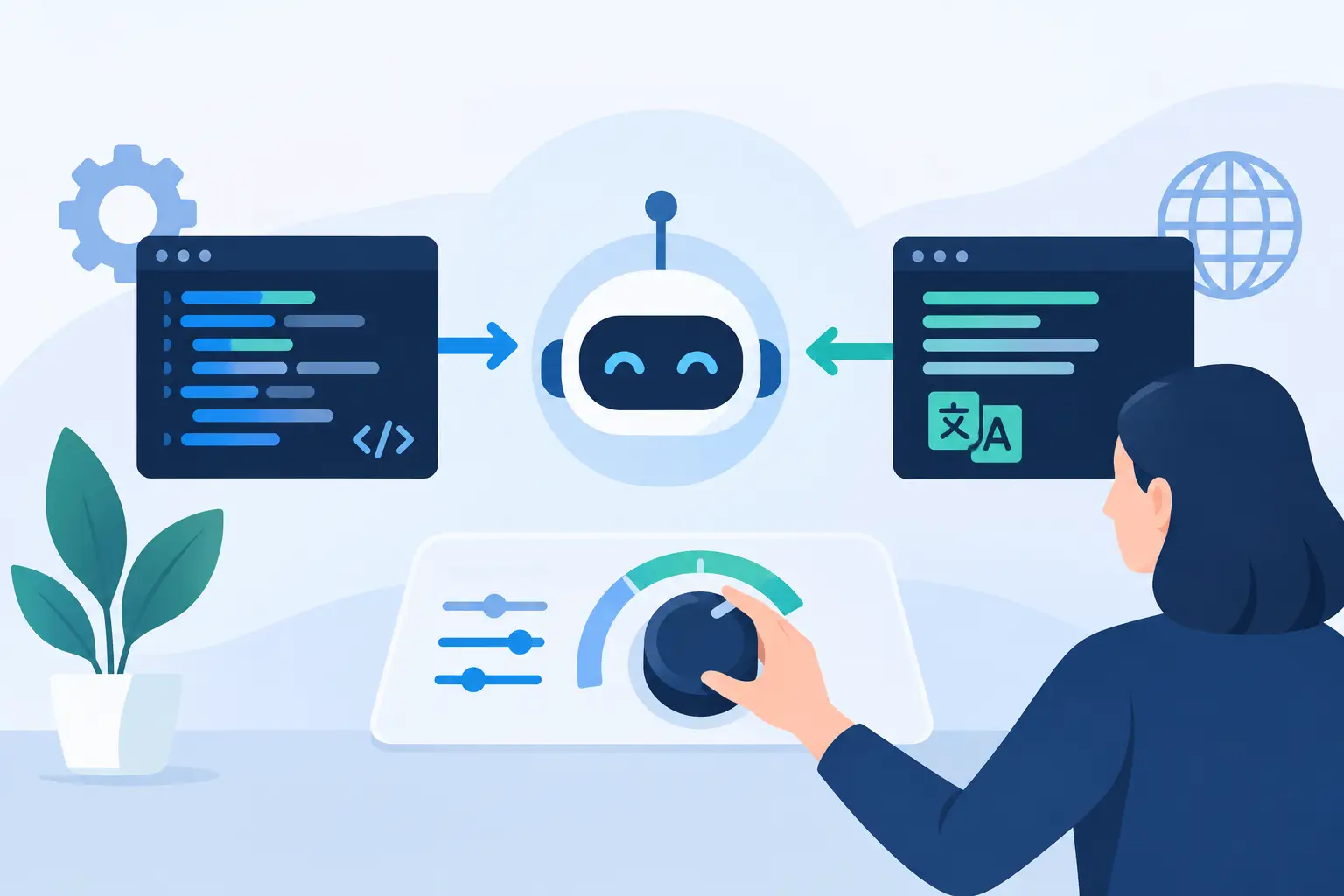
A maintenance instruction mistranslated by one term can stop a production line. A safety briefing interpreted without the correct process vocabulary can expose people to harm. That is why AI engineering translation trends deserve attention from industrial leaders, but not blind trust. The question is not whether artificial intelligence will enter technical communication. It already has. The real question is where it can reduce workload without transferring unacceptable risk to your project.
For plant managers, project directors and EHS professionals, language is part of operational control. It affects commissioning schedules, training outcomes, audit findings and the accuracy of every instruction passed between international teams. AI can assist that work. It cannot be allowed to become an unmonitored decision-maker in environments where a misunderstood pressure value, lockout procedure or SAP field can cause major loss.
AI engineering translation trends are moving into operations
The most significant change is the move from generic machine translation towards systems that can be configured with company terminology, approved reference documents and technical glossaries. A general-purpose tool may understand everyday German or English. It may still confuse a component name with a process step, translate a safety label too loosely or use terminology that is correct in one sector but wrong in another.
Engineering organisations are therefore beginning to treat language data much like controlled technical data. They are building approved termbases for equipment, materials, alarm messages and job roles. They are also using translation memory to ensure that a phrase approved for an operating manual appears the same way in training slides, maintenance procedures and supplier correspondence.
This is a useful direction. Consistency saves time and reduces rework. However, a terminology database only works if it has been built, checked and maintained by people who understand the operation. Feeding old manuals into an AI system does not automatically create a safe linguistic reference. If the source documents contain outdated names, unofficial abbreviations or conflicting instructions, AI may reproduce those errors faster and at greater scale.
Real-time speech tools are improving, but context remains decisive
Speech recognition and live translation are attracting particular interest during multinational meetings, remote support sessions and site visits. They can produce quick captions, searchable transcripts and a rough first pass of what was said. For internal meetings with low operational consequence, this can be genuinely useful.
A live tool is not a substitute for a qualified technical interpreter when a commissioning engineer is explaining a fault sequence, a safety specialist is delivering mandatory instruction or a supplier is negotiating responsibility for a failed system. Industrial speech is rarely clean, slow or standardised. It includes background noise, regional accents, overlapping voices, product codes, abbreviations and incomplete sentences spoken while people point at equipment.
The risk is not simply that the software gets a word wrong. It may produce a fluent-sounding phrase that masks uncertainty. A human specialist can interrupt, ask for clarification, recognise when an acronym has two possible meanings and tell the team that the source statement itself is ambiguous. That intervention protects the work. Software does not carry that responsibility.
Where AI creates value in technical translation
Used with defined controls, AI can shorten routine preparation and documentation work. It is particularly effective where the source material is repetitive, terminology is settled and a competent reviewer remains accountable for release.
For example, an engineering team may use AI-assisted translation to prepare a first draft of recurring parts descriptions, standard purchase enquiries or internal progress reports. A translator with relevant sector knowledge can then review the output against drawings, specifications and the approved glossary. The gain comes from reducing repetitive drafting, not from removing expert verification.
AI can also help teams search large volumes of multilingual documents. During an acquisition, factory expansion or equipment upgrade, project staff may need to locate every reference to a particular valve, electrical cabinet or quality requirement. Language technology can accelerate that search and highlight possible inconsistencies. It cannot determine on its own which document revision is contractually valid or whether a translated requirement meets local regulatory expectations.
For written material, the strongest workflow is usually controlled automation followed by human technical review. The level of review should match the consequence of error. A non-critical internal note does not need the same scrutiny as a permit-to-work procedure, a process safety document or an operator training manual.
The new risk is false confidence
AI output is often persuasive because it is immediate, grammatically polished and presented with certainty. That creates a management risk: teams can mistake readable text for verified meaning.
Consider a power plant outage. A contractor sends instructions concerning an isolation point, a pressure test and a release sequence. If AI translates the text smoothly but chooses a term that refers to a similar component rather than the exact installed component, the mistake may not be noticed until work begins. At that point, the cost is measured in delay, additional labour, lost generation and potentially safety exposure.
The same issue appears in automotive manufacturing. A training package may accurately translate most of a new assembly process while mishandling one quality-control instruction. Operators can then complete the course, believe they understand the standard and repeat the error across a shift. The language failure has become a quality failure.
This is why technical translation cannot be assessed on speed alone. Decision-makers should ask: What happens if this wording is wrong? Who will detect the error? Is the person reviewing it familiar with this equipment, process and working environment? If no credible answer exists, the content should not be released on the strength of AI alone.
AI engineering translation trends require a risk-based policy
The right policy is not a blanket ban, nor an instruction to use AI wherever possible. It is a clear separation between low-risk efficiency work and high-risk communication that needs specialist control.
Start by classifying documents and meetings by consequence. Routine internal drafts, standardised records and non-sensitive reference material may be suitable for AI-assisted preparation. Documents governing safety, compliance, contractual obligations, equipment operation, commissioning or formal training should have named human reviewers with the relevant technical and linguistic competence.
Data handling must be part of the policy. Engineering drawings, production parameters, customer specifications and investment plans can contain commercially sensitive information. Before uploading anything to an external platform, establish where data is processed, whether it is retained, who can access it and whether the arrangement meets your contractual and security obligations. A fast translation is not economical if it exposes proprietary information.
It is also sensible to require source-text discipline. AI cannot resolve vague writing reliably. If an instruction says, „check the unit before restarting”, a system has no way to know whether unit means a pump, a line, a cabinet or an entire production cell. Clear source writing, controlled terminology and version management improve both human and AI translation.
Interpreting remains a live operational safeguard
Some buyers assume that better speech technology will make on-site interpreting less necessary. In serious industrial assignments, the opposite may be true. As projects become more international and systems become more complex, teams need someone who can manage meaning in real time.
A specialised interpreter does more than convert words between English, German and Hungarian. They follow the logic of a technical conversation, preserve warnings and conditions, maintain consistent terminology and flag points that need clarification. During a plant visit, an audit or SAP implementation workshop, that capability keeps discussions moving without allowing assumptions to pass as agreement.
BeneDictum assigns technical interpreters according to the field involved because industrial credibility depends on more than language fluency. An interpreter supporting petrochemical work must recognise process terminology. One supporting automotive training must understand the operational language of the line. That preparation is what helps prevent a fast conversation becoming an expensive misunderstanding.
Build a controlled hybrid model
The organisations that gain most from AI will not be those that replace expertise indiscriminately. They will be those that define approved use cases, maintain terminology ownership and keep qualified people at the points where mistakes carry consequences.
Use AI to accelerate preliminary drafts, retrieve information and reduce repetitive administrative effort. Use specialised translators and interpreters to verify technical meaning, support live high-stakes communication and take responsibility for material that affects people, assets and delivery. The dividing line is straightforward: when a wrong word can stop work, compromise safety or change a commercial commitment, precision must have a named human owner.
Technology will continue to get faster. Your control over meaning must keep pace.
0 Comments