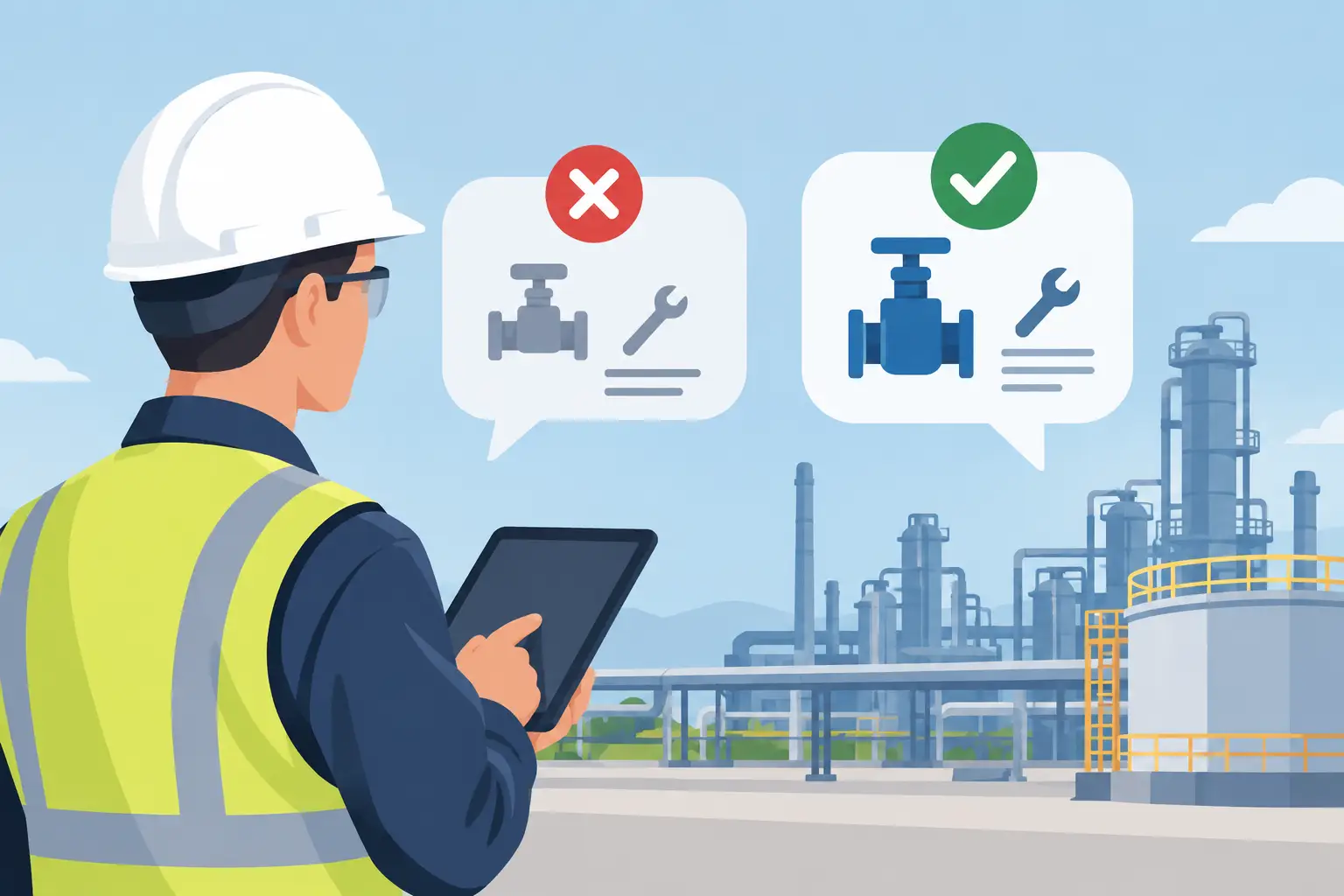
A single mistranslated instruction can stop a production line, invalidate a safety briefing or send an installation team to the wrong component. In high-stakes engineering environments, preventing terminology errors is not a matter of polished communication. It is a control measure for protecting people, programme dates and capital investment.
This is especially true when international teams work together on factory construction, energy projects, SAP implementation, commissioning or workforce training. General fluency in English, German or Hungarian is not enough when discussions involve lockout procedures, pipe classes, torque settings, process parameters, acceptance criteria or system permissions. The language must be correct in context, at the moment it is needed.
Why terminology errors become commercial risks
Technical terms are rarely interchangeable. A word that appears harmless in everyday conversation can carry a specific operational meaning in a plant, workshop or control room. Confusing a valve type, a maintenance state or a measurement unit may lead to wasted work. Confusing a safety instruction can lead to far more serious consequences.
Consider a commissioning meeting where a German engineer describes a required pressure test, while a Hungarian contractor understands the instruction as a functional check. Both activities may sound plausible to a non-specialist interpreter. Yet they require different preparation, equipment, records and safety controls. The discrepancy may only surface when a milestone is missed or an auditor asks for evidence that the test was completed.
The commercial consequences are not limited to rework. Terminology mistakes can cause idle labour, delayed deliveries, plant downtime, contractual disputes and failed training. On a large investment project, a misunderstanding repeated across several shifts can become a costly operational habit before anyone identifies its source.
Where errors are most likely to occur
The highest risk is not always during a formal presentation. Errors often arise in fast, pressured conversations where participants assume that everyone shares the same technical frame of reference. A site walk-through, a toolbox talk or a troubleshooting call can involve abbreviations, legacy names, local shorthand and incomplete sentences.
During construction and installation, teams may need to distinguish between similar equipment, interfaces and tolerances. In petrochemical work, terminology can affect isolation, hazardous-area controls and permit-to-work procedures. In automotive manufacturing, the issue may be a precise sequence in an assembly process, a quality deviation or a robot cell instruction. In energy projects, errors can concern protection systems, switching operations or the status of equipment that must not be approached or energised.
Digital projects create a different but equally material exposure. During SAP implementation, a term such as plant, storage location, batch, release strategy or master data has a defined system meaning. Translating it conversationally rather than functionally can create incorrect user training, unsuitable workflows and unreliable reporting. The interpreter must understand whether the speaker is referring to the physical operation, the business process or the configuration within the system.
Preventing terminology errors before the assignment begins
The most reliable interpretation work starts before the first meeting. A specialist interpreter needs a clear view of the assignment’s technical scope, the participants, the working languages and the consequences of misunderstanding. This allows preparation to focus on the terms that genuinely affect execution.
Provide available project materials in advance, including agendas, drawings, operating procedures, training slides, equipment lists, previous meeting notes and relevant abbreviations. These documents do not replace subject knowledge, but they help establish the project’s own vocabulary. Every site develops preferred names for machinery, stages and processes. Capturing those names prevents unnecessary confusion on the day.
It also helps to identify which decisions will be made during the assignment. Is the meeting intended to approve a design change? Train maintenance technicians? Investigate a quality issue? Review an incident? The interpreter must know when a phrase is simply descriptive and when it constitutes an instruction, commitment or acceptance decision.
A short pre-assignment briefing can expose terminology that has more than one meaning. For example, the word “release” can refer to releasing a product, granting a system approval, removing energy isolation or allowing a work permit to proceed. The correct interpretation depends entirely on the process being discussed.
Build a project glossary, but do not rely on it blindly
A glossary is valuable when it is specific, current and agreed by the technical team. It should include equipment names, process terms, safety language, system labels and acronyms, with approved equivalents in each working language. For recurring projects, it becomes a practical asset that improves consistency between meetings, training sessions and translated documentation.
However, a glossary cannot solve every problem. Terms change during project delivery. Suppliers use different nomenclature. Experienced operators may use shorthand that does not appear in official documents. The interpreter needs sufficient field knowledge to recognise when a term is unclear, ask a focused question and prevent a confident but incorrect rendering.
Choose expertise, not language ability alone
The central procurement question is straightforward: does the interpreter understand the industry in which the conversation takes place?
A capable general interpreter may communicate effectively in commercial meetings. Technical interpreting requires another level of judgement. The interpreter must follow complex explanations at speed, retain terminology accurately and recognise the difference between terms that sound similar but carry different engineering, safety or contractual consequences.
For an audit, the interpreter needs to handle the language of evidence, non-conformities, corrective actions and compliance. For workforce training, they need to preserve the sequence and force of instructions rather than summarise them. For a plant visit, they need to keep pace with equipment-specific discussion while ensuring visitors understand restrictions and safety requirements.
This is why BeneDictum assigns interpreters according to sector knowledge, particularly for energy, petrochemical and automotive environments. The objective is not merely to translate words. It is to preserve technical intent so that the receiving team can act correctly the first time.
Control communication during the work itself
Even a highly experienced interpreter needs the right working conditions. Rushed, noisy or poorly structured communication increases the risk of omissions and assumptions. Project leaders can reduce this risk without slowing the work down.
Ask speakers to state critical instructions in complete units: what must be done, by whom, to which asset, under what condition and by when. Avoid stacking several decisions into one long sentence. When a specification, number, tag or unit is operationally significant, allow it to be repeated and confirmed.
For safety-critical or irreversible decisions, use closed-loop communication. The instruction is interpreted, the receiving party repeats their understanding, and the responsible engineer confirms it. This is not unnecessary formality. It is a quick method of catching errors before a team begins work, changes a setting or signs an acceptance record.
Where possible, support spoken interpretation with the physical or digital reference: a drawing, a photo, an equipment tag, an SAP screen or a controlled procedure. Visual confirmation is particularly useful when several components have similar names or when a local term differs from the supplier’s documentation.
Treat questions as a safeguard, not a delay
An interpreter who asks for clarification is protecting the project. In technical settings, guessing is more dangerous than pausing for ten seconds to confirm an ambiguous phrase. Decision-makers should make this expectation explicit at the start of a meeting or site assignment.
The right question is concise and purposeful: does “isolation” mean electrical isolation or process isolation? Is this dimension nominal or actual? Does the instruction apply to all lines or only line three? Such interventions show that the interpreter is following the operational meaning, not simply matching words between languages.
There is a trade-off. Constant interruption can disrupt a meeting, particularly when participants are already under schedule pressure. But the answer is not to discourage questions. It is to prepare properly, use an agreed glossary and reserve clarification for terms that affect safety, quality, cost or responsibility.
Make terminology accuracy part of project governance
Preventing terminology errors should not sit solely with the interpreter. It requires ownership from engineering, operations, EHS, training and project management. When a new term, revised procedure or supplier-specific expression emerges, record the approved wording and share it with the relevant teams.
After key sessions, review whether any terminology caused hesitation, disagreement or repeated explanation. These are useful signals. They may reveal a gap in the glossary, an unclear procedure or a deeper misalignment between the project team and the operating workforce.
For ongoing assignments, consistency matters as much as immediate accuracy. Using the same technically correct term across meetings, training materials and translated documents reduces the chance that staff will treat different labels as different tasks. It also creates clearer evidence for audits and handovers.
The best time to address a terminology risk is before it reaches the shop floor, the control room or the project schedule. Give specialist language support the same attention you give engineering checks: define the risk, appoint the right expertise and verify understanding where the consequences are highest.
0 hozzászólás